“When Learning Becomes Continuous and Owned by Everyone, Not Just by L&D, the ROI Question Starts Answering Itself.”

Katja, many thought leaders, such as Simon Brown and Stefaan van Hooydonk, emphasize that employees are inherently curious. Yet, organizational structures often fail to harness this attitude. From your perspective, why is that disconnect so persistent?
Katja Schipperheijn: You’re right to start there, and yes, the truth is: curiosity isn’t just a nice-to-have. For me, it is one of the genuine human competencies, not a skill. That distinction matters. Skills can be taught: Critical thinking, presenting, and operating a machine. Competences are different. They are behavioral, connected to who we are, to the inner child that wants to explore. You can drill a procedure, but you cannot drill curiosity. And when leaders confuse the two, they default to pushing “training” instead of cultivating learning. I grew up with that word “training.” My father worked in it. As a kid, I honestly thought he trained dogs, because that’s how conditioning sounded to me: do this, get a reward, take the test, and you’re done. Training has an endpoint. Learning does not: We were born learning; apart from those first crying minutes, we were joyfully trying to make sense of the world – smells, textures, voices, all of it. That joy never entirely disappears; it just gets crowded out by systems that reward compliance. So, if leaders genuinely want to unlock performance, they need to bring back that sense of joyful, self-driven discovery.

Let’s clarify that distinction further. In practical terms, how does learning differ from training within organizations?
Training is a subset. Useful, yes, especially when you need a safe, standardized way to operate a tool or follow a procedure. But most of our learning happens outside training rooms and LMS modules. It is messy and social. It releases dopamine and serotonin when we connect dots and work toward those “aha” moments; our mirror neurons spark when we learn with and from others. Some people hear “learning” and feel stress because their reference point is grades and comparison. Leaders must help people rewire that association, moving from fear to curiosity. I often explain the difference with a very practical anecdote: the day bottle caps changed. I failed twice to close a Coke bottle correctly, and twice my purse got soaked. No amount of “training” on the old cap would have helped. I needed openness, curiosity and imagination to try a different motion. That tiny episode is how learning actually feels: experiment, fail, adjust. After that, I never forgot.
Procedures make us efficient; competencies make us adaptive.
Your latest book, The Learning Mindset, builds on these ideas. Why do you see this mindset as so urgent today, and how does it expand upon models such as the growth mindset?
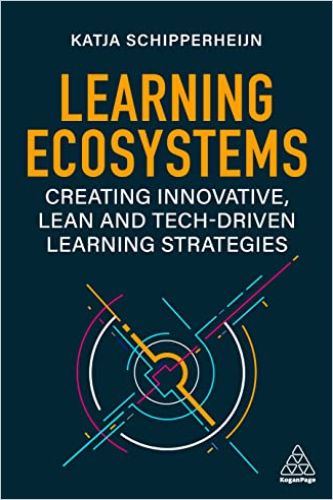
Because we live in what I call “liminal times.” We are constantly “between”: Technologies leaping, markets shifting, roles morphing. Years ago, I wrote Learning Ecosystems to help organizations align strategy, culture, processes, and technology. And still I heard: “People don’t want to learn.” Here, in Belgium, some policymakers recently even responded with mandatory training days. That is the opposite of what works: Fear-based compliance kills curiosity – and a Learning Mindset.
So, you decided to end these misunderstandings. On your mission, you even went back to Carol Dweck’s work.
Indeed. The Growth Mindset is foundational: It is about the belief that abilities can be developed. But it is primarily psychological and individual. The Learning Mindset builds on that and moves us from “I believe I can grow” to “we behave as learners together.” It is collective, behavioral, and future-facing.
I summarize it as reflect–relate–reframe: Keep examining your beliefs and labels, connect them to your context and relationships, and reframe behavior in the here and now.
And there is another delta: I explicitly include the human-AI symbiosis. Machines learn. Humans learn. Together we form “superminds” that can be more than the sum of parts, if we design for that interdependence instead of pretending it is either/or.
Many executives, however, will still ask for a starting point. If a leadership team wants to begin embodying a learning mindset tomorrow, what guidance do you offer?
I am a rebel on that question. If I hand leaders a neat “top three,” they stop thinking and copy something that may not fit – context matters. That said, I can offer orientations without turning them into a checklist: Encourage mistake-making and mistake-sharing. Seek the deep drivers that block learning in your system. And be a learning leader yourself: Ask for feedback, show your doubts, model curiosity and other competences that strengthen the Learning Mindset. These are not steps to copy; they are behaviors to inhabit. If you embody them, your people will too.
Creating the right environment seems crucial. You already mentioned that many people instinctively refer to their school days when they hear the word “learning.” What conditions enable people to experiment, fail, and speak up without fear?
We love to blame schools for squeezing out creativity, but families and early environments matter just as much. Labels stick. Comparisons stick. I know this personally: My biological father often told me I wasn’t smart, but my stepfather later told me I could do anything. That second voice created room to try. In organizations, learning leaders, often without formal titles, play that role.
I call them learning influencers: the person in the room who connects people, asks for feedback, shares their own mistakes, and creates a glue of trust.
Can you give an example of a successful learning influence?
Not long ago, I ran a workshop with young talents in an international company. They struggled with ideation and cooperation and had no idea why. A pre-assessment then showed that nine out of 30 had severe imposter syndrome. That was not just self-doubt; it was paralysis of one-third of the group. They would not speak up, so the team lost ideas. Their solution, not mine, was to run a “Fuckup Night:” Onstage, they shared their errors, their learnings, and the ripple effects on the team. Together, we then turned it into a permanent social channel on their learning platform. Every week, the “best-of fuckups” were posted. Suddenly, people came to the LMS, which was formerly mostly abandoned, for stories, not just mandatory courses. It built community. It smoothed onboarding. It normalized feedback. That is how a safe environment looks in practice: funny, honest, collectively owned – and very influential.
Social learning clearly has an impact, and according to science, it’s still the preferred way to learn for most of the workforce. Still, many CFOs will demand evidence of ROI. How can L&D measure outcomes without falling into vanity metrics?
First, L&D alone cannot carry corporate learning; without C-level buy-in for a complete learning ecosystem, you’re lost. Second, attendance rates, skills certificates, and end-of-course surveys do not equal value.
ROI sits where learning reduces waste and increases customer value. That is the core of lean learning.
So, for example, when we mapped learning to business outcomes with a global player in food, we looked at fewer errors, faster ramp-up, and improved customer experience. We also looked at hidden waste: excess content inventory that nobody uses; overproduction of slides and micro-modules; motion and transport – time wasted navigating fragmented systems; defects in outcomes where training did not shift behavior; underutilized skills when experts keep knowledge in their heads; and over-processing, where we add steps that do not add value. The list is much longer. And it costs a lot.
So, how do you get rid of the “waste?”
Practically, we built an integrated data picture with IT, HR, L&D, and the business. The measurement moves far beyond the LMS. You do not need a moonshot: Start small, tie learning to one urgent business problem, agree on the outcomes that matter, and learn your way forward. That is also where the learning maturity model helps: Who co-owns measurement? What does “success” mean in your context? If you answer those, ROI stops being a beauty contest of dashboards and starts being a conversation about value creation.
Could you share a few more initiatives that have successfully sparked change –approaches others might adapt to their own context?
One practical entry point is a company-wide introduction to The Learning Mindset, combined with our Amplifier: a short diagnostic that helps people reflect on their drivers – attitudes toward learning, their tech stance, their collaboration style, the state of key competencies like curiosity, empathy, openness, realism, positivity, resilience, and consilience, and whether impostor dynamics are at play. The data does not “rank” people; it sparks conversations. Teams compare patterns, leaders address blockers, and you can nudge support where it matters most. The “Fuckup Night” example remains my favorite because it has a significant social impact. It started as a single event and became a weekly ritual and then an LMS channel. It helped impostors, enabled peer appreciation across roles, strengthened onboarding, and, most importantly, increased voluntary use of the platform beyond compliance. Another pattern I have seen work is combining microlearning with confidence-based learning. After each question in a course, people rate their level of confidence.
Usually, two profiles emerge: the overconfident underperformer – danger zone – and the high performer who doubts themselves, who are often impostors.
With that insight, you can add human coaching and empathetic AI nudges: “You know this – trust yourself,” or “Let’s revisit this differently.” The point is not to mechanize learning; it is to personalize support where it unlocks behavior.
Let’s turn to AI. Some organizations respond to engagement challenges by pushing out ever more microlearning content and AI-powered learning paths. Is this truly the right way forward?
Often, it is part of the problem. During the pandemic, many organizations bought LXPs and LMSs, stuffed them with huge libraries, and produced thousands of modules. Yet, engagement plummeted. Surprisingly, “more” is not a winning strategy. Still, cutting a bloated e-learning into micro-chunks does not fix relevance. That’s where lean learning comes into play. The concept asks three demanding but straightforward questions: What do we really need to know? When do we need it? How do we deliver it without waste? Only then do we talk about formats and distribution.
Sounds great. But in everyday L&D practice, it can be challenging to separate one from the other.
If you want practical rails, use a five-step approach: discover together; articulate the burning platform; define the path to improvement across content, culture, and technology, in that order; run joint execution; and commit to continuous improvement. Keep the lean drivers visible: time, inventory, motion, overproduction, transport, defects, skills, and over-processing. And when AI enters, use it to remove friction and amplify feedback loops, not to flood people. And always align the algorithm to your values.
You can train an AI coach to be empathetic in tone and pacing, but remember: it is human-instructed empathy.
You’ve also pushed back on the idea of “adaptive learning” as a human competence. Can you clarify your position?
Yes. This is a common misunderstanding. In my book, I do not list “adaptive learning” as a competence. I focus on imagination, curiosity, openness, realism, empathy, positivity, resilience, and consilience. “Adaptive” is what emerges when those human competencies are alive in a supportive environment. And if we talk technology, then “adaptive” refers to intelligent systems that help create lean learning – a layer in the symbiosis between humans and machines. So, adaptivity is not something I ask people to “have” as a skill; it is the product of a learning mindset plus well-designed technology.
On governance: you describe future learning ecosystems as “superminds,” where humans and AI collaborate. What principles should guide organizations to scale this responsibly, and where should AI not be applied?
Start with purpose and protection. Be explicit about what data you capture and why. Protect privacy, default to transparency, and use the data to grow people, not to punish them. I have seen teams make their Amplifier results public, including very senior leaders. That takes courage; it also signals safety. On the “don’t” side: do not use AI to surveil or shame. Do not “nudge” people into nonstop content. And do not outsource values. Instead, ensure human review of prompts and outputs, and set clear red lines for sensitive topics.
Governance is not a document; it is a culture. If your culture celebrates learning and protects people, your AI tools and usage will reflect that.
You also encourage leaders to observe how younger generations learn, for example, through games and social platforms. What should executives take away from these environments?
Some countries are already pushing AI literacy and ethical hacking challenges in early education. Whether or not we agree with every policy, the signal is clear: future readiness blends human competencies with technological fluency. Organizations that cling to old training paradigms while younger talent learns socially and iteratively will struggle to attract and retain that talent. For starters, talk to young people! They are not passive consumers; they co-create. Roblox is a live example of self-directed learning: A girl I met in South America, coming from an impoverished neighborhood, quietly built games while her friends played, learning from the community “academy,” earning in-game currency, and iterating from feedback. That is a competence factory hiding in plain sight. Fortnite, on the other hand, and despite its reputation, shows how social learning works: gatherings around a campfire to plan, debrief, and even grieve together. That is reflection, peer coaching, and community. Tools like Snapchat preview how AI companions can act as personal coaches. Although many C-level executives may have never heard of these tools and platforms, they are worth exploring for the ways they work.
Younger users are often more critical and reflective than we assume. Instead of banning these spaces, observe the mechanics: peer reputation, bite-sized creation, visible progression, low-friction feedback. Then design organizational LearnScapes that borrow those mechanics ethically.
Where does this shift leave the L&D profession itself? What does “excellence” look like for L&D leaders in this new LearnScape?
It starts with identity. If your value proposition is “we produce content,” you will be automated. If your value proposition is “we cultivate learning leaders and design cognitive ecosystems where knowledge flows,” you become strategic. The progression I see is from individual learner to team learner to learning influencer to learning leader to learnscaper. The learnscaper assembles the “League of Extraordinary Learners”: rebels, misfits, neurodiverse thinkers – people who challenge and glue teams together. They help co-own measurement with IT and the business. They tune algorithms to organizational values. And they model the vulnerability they ask of others: requesting feedback, sharing doubt, and celebrating “good” mistakes. That is how a learning ripple effect starts to affect an organization.
Finally, if an organization were to launch this journey next week, what pitfalls should they avoid from the outset?
Run discovery with stakeholders before you touch content. Name the obstacles and leave them visible; do not sweep them under the carpet. Hunt for waste ruthlessly, especially overproduction and underused content inventory. Be bold enough to say, “This job no longer exists in its current form,” if a role is only about creating slide decks. Start small and scale smart: one urgent business problem, a tight definition of success, and a cadence to measure–learn–adapt. Never forget:
Embrace the underground power of employees! Co-create with them rather than stage-managing ‘pilots’ nobody asked for. Anchor AI leadership honestly: if you lack expertise, say so and bring it in while growing your own.
And most of all, keep the culture moving. Make experimentation safe. Share insights across teams. When learning becomes continuous and owned by everyone, not just by L&D, the ROI question starts answering itself.
About the Author
Katja Schipperheijn is an internationally recognized author, speaker, and consultant. She is the author of Learning Ecosystems (2022) and The Learning Mindset (2024).

How the Journal Saves You Time
Reading Time
14
min.
Reading time for this article is about 14 minutes.
Saved Time
11
h
This article saves you up to 11 hours of research and reading time.
Researched Abstracts
2
We have curated the most actionable insights from 2 summaries for this feature.
2
We read and summarized 2 books with 560 pages for this article.